Let's Talk Kyrgyzstan
Kyrgyzstan has been in the news a lot lately, but I feel that most people, including myself, do not know much about the country, or what has been happening there. The following is my attempt to rectify this fact.
Background†
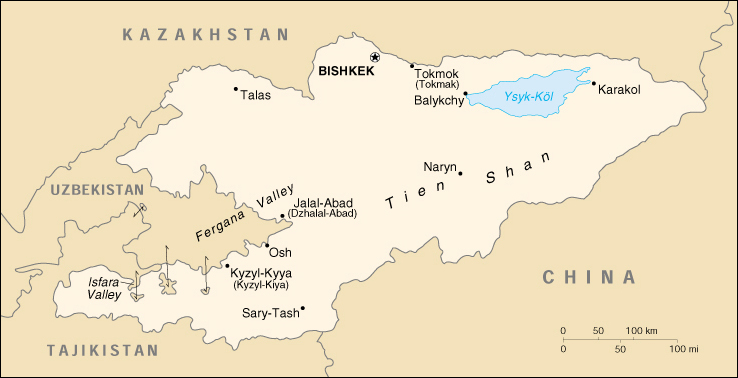
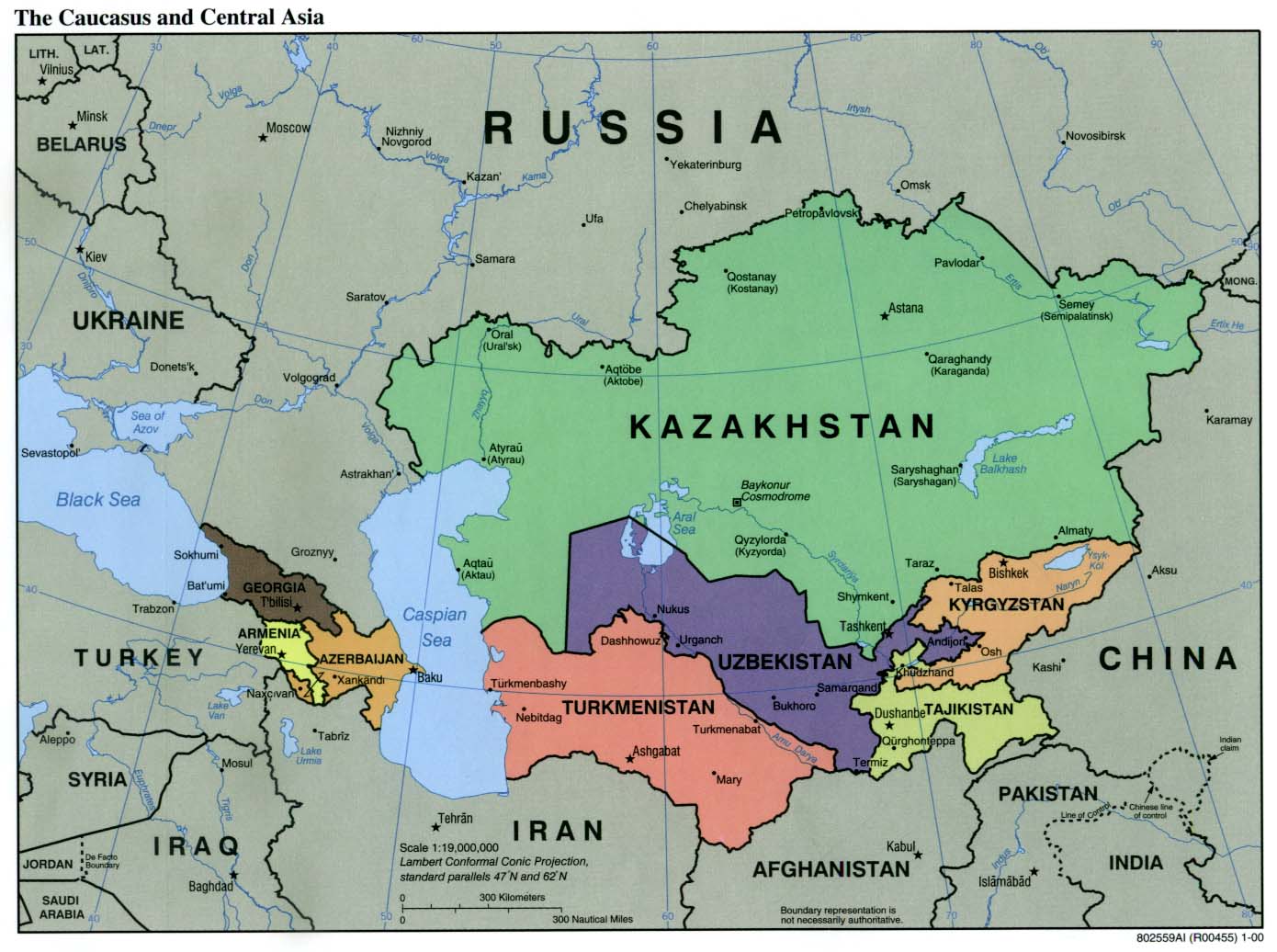
Kyrgyzstan is a former Soviet Republic which achieved its independence in 1991. It is located in Central Asia, bordered by China to the southeast, Tajikistan to the south and west, Uzbekistan to the west, and Kazakhstan to the north. Its area totals roughly 200,000 square kilometers, or 77,000 square miles, which is a bit smaller than South Dakota. Kyrgyzstan has a population of just over 5 million, and its capital is Bishkek. Take a look at these maps of Kyrgyzstan, The Caucasus and Central Asia, and Asia at large.
What's been happening‡
On March 24, 2005, mass protests culminated in the takekover of President Askar Akayev's presidential compound. Akayev had ruled Kyrgyzstan since 1990, about one year before it gained full independence from the Soviet Union. While he was originially championed as one of the most democratically-inclined leaders in Central Asia, as his tenure progressed his motives became increasingly questionable. His hunger for power showed itself in the form of quelling the opposition and rigging elections. Such a rigged election was held at the beginning of last month, which was seemingly the last straw. Protests were held, one of which got violent and somewhat out of hand, ending with the takeover of the president's compound. Akayev subsequently fled to Kazakhstan and then Russia, at which time a power struggle ensued. Both the old and newly elected parliaments claimed legitimacy. At one point, both parliaments were meeting on different floors of the same building, each considering itself legitimate. Eventually, the lower house of the old parliament decided to step down, and urged the upper house to do the same. On Sunday, April 3, 2005, President Akayev signed an agreement to officially resign, and the following day he stepped down. This paves the way for presidential elections which are tentatively scheduled for June 26.
Where we are now*
When these events began last month, many were claiming that we were seeing another domino fall in a global movement towards democracy, following the examples of Ukraine and Georgia. As time has gone on, however, many are frustrated that, instead of such a democratic uprising, this might have simply been a coup. Student activists had been hoping for a peaceful uprising and were frustrated when the protests got out of hand, violent, and ended up with the seizure of Akayev's compound. Furthermore, they feel like they were pushed aside by professional politicians, who quickly stepped in. Some claim that events unfolded too quickly, without time for civic education.
So currently we are left with a split between two factions who will face off in the presidential election next June: Kurmanbek Bakijev, the acting president who represents ths south and is allied with the judiciary, and Felix Kulov, the former security chief who represents the north and is allied with Parliament.
Another question is whether this so-called Tulip Revolution will spark uprisings in other Central Asian, former Soviet states. Pro-democracy protests have since occurred in Belarus; however, these were quickly put down by security forces. Perhaps leaders of these authoritarian countries are learning to keep a tighter leash on the free expression of their population.
Sources:
†CIA Factbook: Kyrgyzstan; EurasiaNet: Kyrgyzstan
‡NYTimes: President of Kyrgyzstan Sign Resignation Deal; CNN.com: Kyrgyz opposition seizes power
*NYTimes: Kyrgyzstan's Shining Hour Ticks Away and Turns Out to Be a Plain, Old Coup; NYTimes: What Would Happen if Russia Exploded in Protest?
Background†
Kyrgyzstan is a former Soviet Republic which achieved its independence in 1991. It is located in Central Asia, bordered by China to the southeast, Tajikistan to the south and west, Uzbekistan to the west, and Kazakhstan to the north. Its area totals roughly 200,000 square kilometers, or 77,000 square miles, which is a bit smaller than South Dakota. Kyrgyzstan has a population of just over 5 million, and its capital is Bishkek. Take a look at these maps of Kyrgyzstan, The Caucasus and Central Asia, and Asia at large.
What's been happening‡
On March 24, 2005, mass protests culminated in the takekover of President Askar Akayev's presidential compound. Akayev had ruled Kyrgyzstan since 1990, about one year before it gained full independence from the Soviet Union. While he was originially championed as one of the most democratically-inclined leaders in Central Asia, as his tenure progressed his motives became increasingly questionable. His hunger for power showed itself in the form of quelling the opposition and rigging elections. Such a rigged election was held at the beginning of last month, which was seemingly the last straw. Protests were held, one of which got violent and somewhat out of hand, ending with the takeover of the president's compound. Akayev subsequently fled to Kazakhstan and then Russia, at which time a power struggle ensued. Both the old and newly elected parliaments claimed legitimacy. At one point, both parliaments were meeting on different floors of the same building, each considering itself legitimate. Eventually, the lower house of the old parliament decided to step down, and urged the upper house to do the same. On Sunday, April 3, 2005, President Akayev signed an agreement to officially resign, and the following day he stepped down. This paves the way for presidential elections which are tentatively scheduled for June 26.
Where we are now*
When these events began last month, many were claiming that we were seeing another domino fall in a global movement towards democracy, following the examples of Ukraine and Georgia. As time has gone on, however, many are frustrated that, instead of such a democratic uprising, this might have simply been a coup. Student activists had been hoping for a peaceful uprising and were frustrated when the protests got out of hand, violent, and ended up with the seizure of Akayev's compound. Furthermore, they feel like they were pushed aside by professional politicians, who quickly stepped in. Some claim that events unfolded too quickly, without time for civic education.
So currently we are left with a split between two factions who will face off in the presidential election next June: Kurmanbek Bakijev, the acting president who represents ths south and is allied with the judiciary, and Felix Kulov, the former security chief who represents the north and is allied with Parliament.
Another question is whether this so-called Tulip Revolution will spark uprisings in other Central Asian, former Soviet states. Pro-democracy protests have since occurred in Belarus; however, these were quickly put down by security forces. Perhaps leaders of these authoritarian countries are learning to keep a tighter leash on the free expression of their population.
Sources:
†CIA Factbook: Kyrgyzstan; EurasiaNet: Kyrgyzstan
‡NYTimes: President of Kyrgyzstan Sign Resignation Deal; CNN.com: Kyrgyz opposition seizes power
*NYTimes: Kyrgyzstan's Shining Hour Ticks Away and Turns Out to Be a Plain, Old Coup; NYTimes: What Would Happen if Russia Exploded in Protest?
posted by rtkelly at 7:27 AM



1 Comments:
Very informative! I enjoyed this entry immensely. Now you have to write one about Georgia because I don't know about that conflict either.
Post a Comment
<< Home